Showing posts with label rchme. Show all posts

Thursday, 21 November 2013

October photo competition

This month again we have two runners-up. In no particular order, as always, they are Levant Tin Mine Stack by Joyce Macadam:


The placement of the stack in the composition is what is important here. There is always something poignant, I think, about ruins by the sea, such as the pollarded columns of Roman temples that can be seen at various places on the coast in Libya. In fact this particular mine went nearly two miles out under the sea, according to Wikipedia, so the impression that the stack is somehow stranded on the coast is misleading: it is really an example of engineering ingenuity.

Talking of great engineering, our other runner-up photo was The 4.50 from Paddington by Richardr.


Richardr captures the elegance as well as the grandeur of Brunel's great structure, and reanimates the cliche that such buildings were the cathedrals of their age. Personally, this picture reminds me happily of one of my favourite novels, Austerlitz by WG Sebald (named not for the battle but for the Parisian station). Sebald habitually used photographs in his fiction - although grainy ones that he degraded by photocopying them, rather than the pellucid image that Richardr has achieved here.

Our winner this month is Ouse Bridge from Skeldergate Bridge by woodytyke:


What the judges particularly admired about this picture was the light (the reflection of the white rails on the left is like a Sisley painting) as well as the splendid panorama. There is a tremendous amount of historical information in this picture, and I can imagine a future historian finding it a rich source. The photographs in the Royal Commission on Historical Monuments series provide an important historical record (supplemented by expert commentary and drawn plans) but the many photographs being taken now, attested in a small way by the BHO Flickr group, will provide far more detailed evidence.

As I announced on the group page, we're going to run together November and December and pick a winner in January. The reason for this is that in December no one will be in the office with the technical savvy to be able to upload a winning picture to the homepage. But please do keep adding your photos to the group!

Wednesday, 18 September 2013

Andrew Minting on RCHME, Salisbury

In the latest in our series of posts on the RCHME series, we have a guest post by Andrew Minting, conservation officer in Salisbury, about the importance of the Salibury volume. Andrew writes:


If there’s one source of information I commend to those researching the buildings of the city of Salisbury, it’s the Royal Commission’s volume on the historic monuments outside of the cathedral close.


Its recent online publication is excellent news and makes the information much more readily accessible to the general public. The copy on my desk is well worn from use on a near-daily basis for many years, providing an understanding of individual buildings and the development of the city from its foundation.  As an historical record of the city in the mid twentieth century, it is invaluable, including buildings that had been demolished from the 1950s onwards.  In comparison with modern mapping, one can trace some of the dramatic redevelopments and losses of the last half-century – the extensive demolition to facilitate the ring road, the Old George and Cross Keys shopping malls, for example.  Many buildings are brought to life through excellent detailed drawings of their timber frames, such as the Plume of Feathers, while plans showing chronological development are particularly useful for those considering the sensitivity of sites to proposed alterations.


The introduction and footnotes provide very useful pointers to all of other primary and secondary sources available, many of which are now to be found at the Wiltshire and Swindon History Centre.

One important note for those unfamiliar with the hardback version of the volume, the planned grid layout of much of the city centre led to the adoption of names for the blocks of the grid, known as chequers, in addition to street names. Where appropriate, the Royal Commission organised the monuments of the volume by chequer, rather than following the lengths of individual streets.  Perhaps the most useful image for users of the online version is to be found in Plan 1, which shows both chequer and streetnames, although the Naish plan of 1716 is a beautiful alternative.

Andrew Minting

Thursday, 18 July 2013

Peter Salt on RCHME, Cambridgeshire

We're pleased to announce that all volumes of the Royal Commission on Historical Monuments of England are now published on British History Online.

Of the last volumes published, three related to Cambridgeshire. Our own Cambridgeshire man, Peter Salt, Editor of the Bibliography of British and Irish History, kindly agreed to write a blog post about the City of Cambridge volume. Peter writes:


When the Royal Commission on Historical Monuments' inventory of the city of Cambridge was published in 1959 in two substantial volumes with a separate container of plans,1 they were priced at the princely sum of five guineas (£5.25).  They were out of print by the time that I paid £52.00 for my copy about 25 years later.  I was conscious at the time that this was virtually ten times the original selling price but I reasoned to myself that they would never be cheaper.  So I greet the appearance of the Cambridge inventory in British History Online with mixed feelings - freely accessible online publication, to the high standards associated with British History Online, is a great boon to scholarship but may reduce demand for the printed volumes and therefore may have devalued my copy!

Naturally, College and University buildings fill most of the Cambridge inventory.  However, it also covers the growth of the town.  Furthermore, from 1946 the Commissioners were empowered not only to make an inventory of 'Ancient and Historical Monuments and Constructions' predating the eighteenth century, as had been done before World War II, but also to describe 'such further Monuments and Constructions subsequent to' 1714 'as may seem in your discretion to be worthy of mention'.2  In the Cambridge inventory, as in the preceding one covering Dorset, this resulted in the adoption of an 1850 cut-off date3 and, for buildings that could be identified as being earlier than 1850, little or no selection seems to have been applied in practice.  Furthermore, as the preface observed, 'the first half of the 19th century' was 'a period of notable urban development in Cambridge'.4  The result was that the volumes cover not only internationally known monuments such as King's College Chapel, but also include some quite modest terraced houses - so modest, indeed, as to include the house in which I lived from 1991 to 2005, which had been built (it was suggested) for the "outside staff" of the larger houses in the same development.5


Such houses were sometimes recorded with almost as much care as the major monuments - the development of which my house formed a part is illustrated by a layout diagram and by internal plans of representative houses, the latter presented alongside plans of similar houses to facilitate comparison.  Even so, there were times when the surveyors were virtually unable to find anything to say: after they had diplomatically described early nineteenth-century houses in Brunswick Walk as 'pleasant in their simplicity and lack of ostentation', they were reduced to reporting that 'Willow Place and Causeway Passage ... are even less distinguished than the foregoing'.6 Nonetheless, the recording and comparison of small terraced houses that were then little more than one hundred years old would have been ground-breaking at the time.

In some cases the survey recorded buildings that were soon to be demolished.  Indeed, Willow Place and Causeway Passage have largely vanished.  That small late-Georgian terraced houses should fall victim to 1960s and 1970s improvements is not surprising (they had been assessed in 1950 as "fourth class" and although, if they had lasted a few years longer, they might well have been refurbished and extended as desirable pieds à terre, it has to be said that our favourable view of Georgian domestic architecture rests in part on the destruction of its meanest specimens).  Perhaps more surprising in a town that trades on its "heritage" is the loss of the 'good brick front of 1727' belonging to the Central Hotel on Peas Hill, where Pepys was supposed to have 'drank pretty hard' in 1660, and one of the secular buildings deemed by the Commissioners to be 'especially worthy of preservation',7 but replaced in 1960-2 by a hostel for King's College.

As Professor Chris Dyer observed in his post in this blog on the Northamptonshire volumes, the Royal Commission's post-war inventory volumes 'marked a high point' in its work that was not sustained.  Since 1984 the Commission and English Heritage (into which the Commission was incorporated in 1999) have continued to record and to analyze, but have published the results in thematic volumes, rather than in parish by parish (or town by town) inventories.  The foreword to the last inventory volume, published in 1984, admitted that 'the creation of an adequately researched and assessed inventory of England's archaeological and architectural heritage is now accepted ... as a complex and infinite task' (my emphasis).  Indeed, what seems 'adequately researched and assessed' to one generation may disappoint the next one.  Now that Causeway Passage has vanished from the map we might well wish that the inventory had gone into a bit more detail.  And, just as 1714 came to seem, after World War II, too remote an end date for the survey, resulting in an expansion of the Commissioners' remit, the 1850 cut off chosen for the Cambridge volumes will seem too remote to those who want to study Cambridge's later nineteenth-century growth.  In practice, though, we must be grateful for what was achieved, and (notwithstanding the potential decline in the value of my printed copy) the online publication of the inventories is very much to be welcomed.


1 All footnote references are to the city of Cambridge inventory. The volumes were continuously paginated and are treated as a single entity by British History Online.

Monday, 10 June 2013

Chris Dyer on RCHME, Northants

British History Online recently published the six inventory volumes for the county of Northamptonshire. To help to put these volumes in context, Professor Chris Dyer has kindly written a guest blog post explaining their importance. Chris Dyer is Emeritus Professor of Local and Regional History at the University of Leicester, and so is the perfect person to introduce these volumes. Professor Dyer writes:

"The inclusion of the Northamptonshire volumes of the Royal Commission on Historical Monuments, England on British History Online will be welcomed by anyone interested in Northamptonshire, but also in the study of many aspects of the material evidence for the history of the English countryside. When they appeared these volumes marked a high point in the work of the Royal Commission. There were volumes on historic buildings, which was the traditional strength of the RCHME's earlier county inventories, but these were more inclusive and systematic than in the early volumes, because village plans were included, with the older buildings marked, and accompanied by brief descriptions of ordinary houses and cottages, and occasional plans and photographs. Larger houses and churches, the usual subjects of surveys of local architecture, received full treatment as well. All of this was thoroughly researched, with  documentary background studies as well as scholarly architectural analyses.


The great innovation and achievement of the Northamptonshire volumes however, is to be observed in the volumes devoted to archaeological sites. Air photograph evidence of field boundaries and settlement sites, mainly of the iron age and Romano-British period, were transcribed on to modern maps, and for the medieval period hundreds of sites marked by earthworks were carefully planned and analysed. They included the famous deserted medieval village sites, and the remains of villages that still survived but had once been much larger. These had only been identified as sites 30 years or so before the Royal Commission planned them. Part of  the medieval rural landscape were the fields, visible as ridge and forrow, and some examples of these survivals were also planned. There was also a great variety of sites and features : park boundaries, moated sites, fishponds, pillow mounds from former rabbit warrens, sites of water mills and the mounds on which windmills had stood. Any past activity which involved digging into the earth and making heaps left indelible traces for the researchers of the RCHME to discover. As the work progressed the plans grew ever more sophisticated, and the interpretations of the meaning of the sites became more accomplished. To give one example of the lessons learned from preparing these volumes, post medieval garden earthworks were recognized and planned in detail, and researchers all over the country realised that the expanses of mounds and ditches that had puzzled them suddenly became explicable. Anyone interested in the formation and decline of rural settlement, landscape history, and aristocratic manipulations of the landscape will find important source material in these volumes. They also mark a chapter in the intellectual history of the study of the rural past. They are finally a sad comment on the philistine treatment of the heritage, because not long after these volumes were completed, instead of declaring the intention of carrying out similar studies of the other English counties, the Royal Commission was merged with English Heritage, and ceased to compile inventories."

Chris Dyer


Wednesday, 29 May 2013

Roman Inscriptions in the RCHME

Over the last couple of months we have published two volumes about Roman remains in England: Roman London and Eburacum, Roman York. These have been part of our current digitisation of the Royal Commission on Historical Monuments inventory series for England.

This subject matter is somewhat unusual for British History Online, although we do have similar material elsewhere, as in the Victoria County History volume for Oxfordshire, Volume 1, and as part of the RCHME we will soon be adding a volume on Iron Age and Romano-British monuments in the Cotswolds. But these two latest RCHME volumes have been a bit of a challenge to digitise because of the large number of inscriptions they contain.

Roman writing did not contain such useful things as spaces between letters, punctuation or differences of case. If you owned a book yourself then you could mark it up for reading yourself, to make things easier. Obviously this couldn't be done with inscriptions, so there was a tendency to add some former of marker between words to make things easier for the reader; here it is done with a mid dot in a dedication tablet from York:


Elsewhere in Roman inscriptions covered by the RCHME a leaf or other symbol is used. Notice that this still doesn't make the inscription very easy to read: words can spill over onto the next line without any indication that they are doing so, as in the name HIERONYMIANVS above; also, like text messages today, Roman inscriptions tend to be highly abbreviated. Fortunately the RCHME editors have painstakingly transcribed, and then translated, the inscriptions for us, with abbreviations expanded. Here is the above:


   DEO ▵ SANCTO
   SERAPI
   TEMPLVM ▵ A SO
   LO FECIT
   CL(AVDIVS) ▵ HIERONY
   MIANVS ▵ LEG(ATVS)
   LEG(IONIS) ▵ VI ▵ VIC(TRICIS)

'To the holy god Serapis, Claudius Hieronymianus, legate of the Sixth Legion Victorious, built this temple from the ground.'

The editors then give us quite a lot of information about who this Claudius Hieronymianus was:

"Claudius Hieronymianus is identified (Prosopographia Imperii Romani, 2nd ed., II, 206, no. 888) with a vir clarissimus of this name involved in a judgment by Papinian about a will (Ulpian, Digest, 33, 7, 12, 40) and with the praeses of Cappadocia whom Tertullian (ad Scap. 3) mentions at the turn of the 2nd and 3rd centuries as persecuting Christians after his wife's conversion..."

Thanks to the efforts of the RCHME editors for these volumes, there is a wealth of information of this type - photographs, transcriptions and translations - now available to all.


Wednesday, 6 March 2013

Image Copyright: An Introduction (1)

Our Permissions Controller for the digitisation of the Royal Commission on Historical Monuments of England, Rachael Lazenby, has written an introductory guide to copyright for images, drawing on her experience on this project and on other work that she has done. This is part one of Rachael's guide; the second part will follow shortly.


Copyright and images - an introductory guide

Rachael Lazenby


I’ve recently been working on the project to digitise the inventory volumes of the Royal Commission on Historical Monuments of England (RCHME). Some of the volumes are already live and can be accessed here.

My role has been to identify all images which were not provided by the Commission and seek permission to reuse them on British History Online. A full report on the methodology I devised for this work along with the results is freely available and is published here.

The work has touched upon many issues relating to copyright which are common when using images in research and so I thought it would be useful to explain some of the basics of copyright, how it affects images in particular, along with providing links to various resources available online.


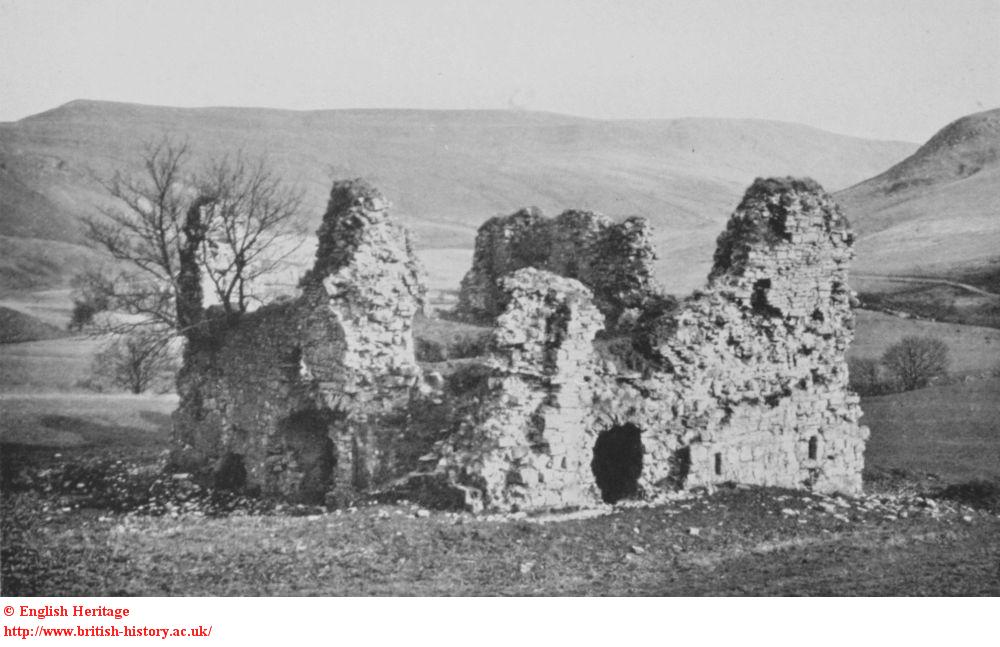
Lammerside Castle, Wharton (1)


Definition of Copyright

Where better to start than with a definition of what copyright actually is:

the exclusive and assignable legal right, given to the originator for a fixed number of years, to print, publish, perform, film, or record literary, artistic, or musical material (2)

A key feature of copyright is that it arises in a work the moment it is created by the originator. It does not have to be registered in the way that a patent might be for a process or a product. It is also important to note that ideas are not subject to copyright - it is the expression of ideas that is subject to copyright. This expression might be a photograph, a piece of text, a musical score or a painting. Copyright may be assigned by the originator to another party or waived by the copyright holder in certain circumstances.

Wherever an originator chooses to display or publish their work the copyright of the work remains with them unless they explicitly assign it to another party or until a fixed number of years have passed after their death. Copyright law varies country by country but in the UK a work remains in copyright until 70 years after the death of the creator at which point it passes into the public domain.

Misconceptions about the right to use images, especially those appearing online, abound.  One of the most common is that if an image does not appear with the copyright symbol and a named copyright holder it is not protected by copyright law. Although such copyright notices can help identify a copyright holder, images without this symbol are still protected by copyright law.  An image that is publicly accessible is still protected by copyright and an image being publicly accessible does not mean it is in the public domain. Copyright protects a work from any unauthorised use. Even if the reproduction of an image is not commercial, for example if it appears in a blog post, it is not legal without the permission of the originator.


Reproducing art and photographs

Cases involving paintings and drawings which are owned by museums can be complex. For example, should you wish to reproduce a photo of a painting by a living artist, you will have to gain permission from the artist, in addition to the permission of the organisation who owns the photo. It is frequently the case that photography is not permitted in museums and galleries, but if you have taken the photo yourself, and the composition is artistic and takes in more than just the painting itself, it may not be necessary to obtain permission. If an artist is deceased you may have to approach their estate for permission to reproduce an image if they have died within the last 70 years.

There are some organisations which specialise in sourcing paintings and drawings and for a fee will make available a high resolution scan of the work as well as arranging permission for an image to be used. Some UK based examples include the Mary Evans Picture Library specialising in historical images, and the Bridgeman Art Library.(3) Many national and university libraries also have extensive image collections which they are making available to students, researchers and commercial parties (although there are often charges for the service).

A great source of historical images with no known copyright restrictions can be found on the Flickr website: http://www.flickr.com/commons/ Their Creative Commons area is a project making freely available content from museums and galleries across the world. They also encourage tagging of the 
images to increase information available about the content.


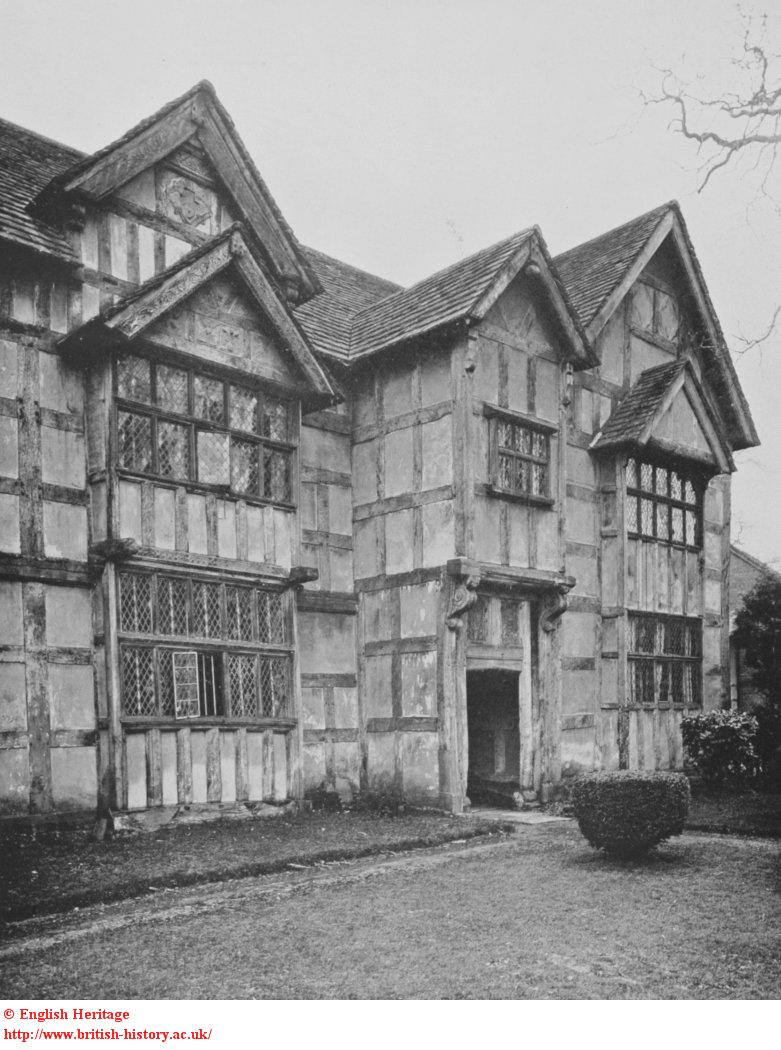
The Ley, Woebley (4)

Licences
For images which have previously appeared in print or online, it is usually the publisher who can advise on who the copyright holder is, and how permission to reproduce an image can be obtained. The originator of an image might have transferred copyright to a publisher permanently, usually termed ‘assigning copyright’, or they might have granted permission for it to be used only in a specific publication in which case it is referred to as granting a licence.

Licences to use images in publications including online projects will state where and how images can be used. So for example to illustrate this article I can use an image which is now owned by English Heritage, as they have given us permission to use images to promote the digitisation of the RCHME volumes. I could also use any images which are now out of copyright. I cannot use images in this post which have been cleared for use in the volumes by outside parties as permission does not extend to any other use of the image.


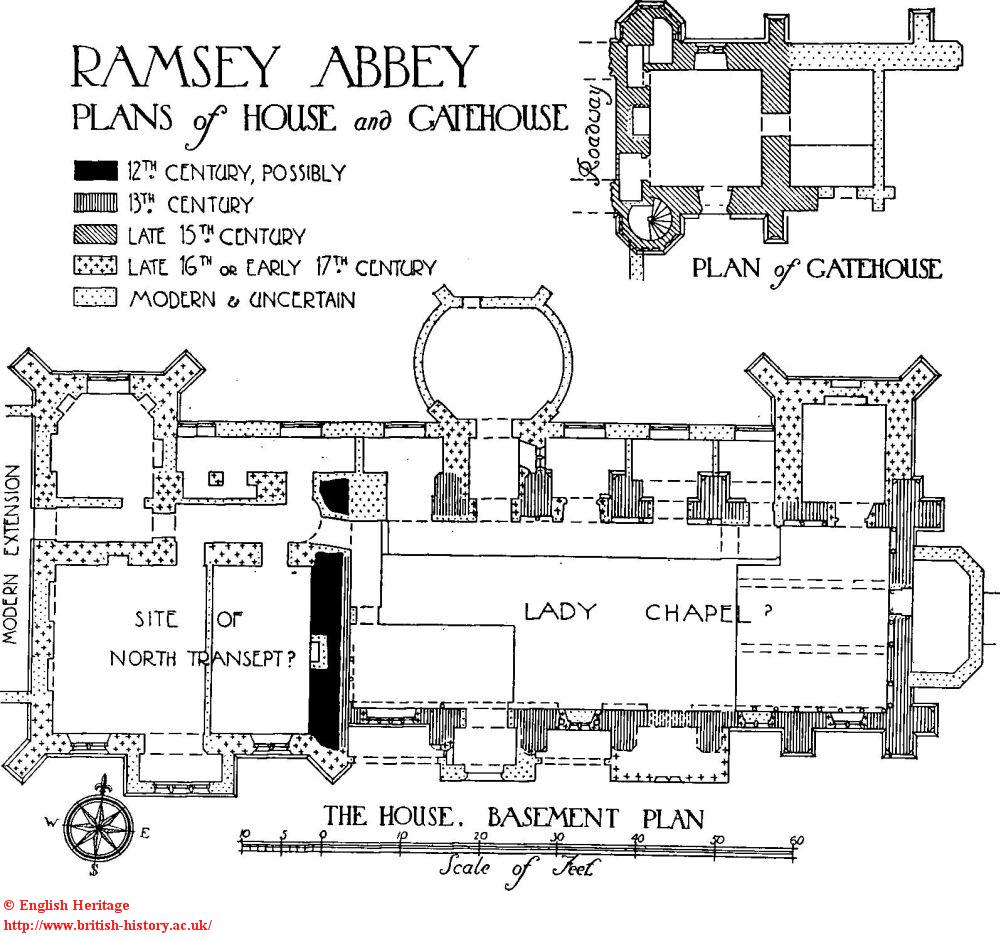
(5)


1. Lammerside Castle, Wharton. Royal Commission on Historic Monuments of England, Westmorland (1936) plate 80 http://www.british-history.ac.uk/report.aspx?compid=120920 retrieved 23/2/2013
2. http://oxforddictionaries.com/definition/english/copyright retrieved 7/12/12
3. http://www.bridgemanart.com/  http://www.maryevans.com/
4. The Ley, Woebley. Royal Commissions on the Historical Monuments of England, Herefordshire: Volume 3 North West (1934) plate 176 http://www.british-history.ac.uk/report.aspx?compid=124854 retrieved 23/2/2013
5. Plan of Ramsey Abbey. Royal Commissions on the Historical Monuments of England, Huntingdonshire (1926) p. 208 http://www.british-history.ac.uk/report.aspx?compid=123804 retrieved 23/2/2013

Wednesday, 20 February 2013

James Bettley on RCHME Essex

Following the publication of the RCHME, Essex volumes on British History Online, the architectural historian James Bettley has kindly written a guest post about the value, and limitations, of these volumes. Dr Bettley's revision of the Pevsner Architectural Guide to Essex was published by Yale University Press in 2007; he was also one of the contributors to the Victoria County History of Essex, Volume 11, published in 2012.

The Inventory of Historical Monuments in Essex


The Royal Commission on Historical Monuments (England) covered Essex in four generous volumes, published between 1916 and 1923. Essex was larger then than it is now – the south-west corner was cut off in 1965, to become the London boroughs of Barking, Newham, Havering, Redbridge, and Waltham Forest – but nonetheless the number of pages devoted to the county is a fair indication of the quantity of interesting buildings still to be found within its borders.

The fieldwork was carried out before the outbreak of the First World War, so it would not be unreasonable to question the value of an inventory that is now nearly a century old. But for those of us who work daily with historic buildings – and for those who only very occasionally wish to find out about an individual building – the Essex volumes remain an invaluable source of information. The descriptions of the major buildings, especially churches, are more detailed than Pevsner’s could be, and because they are written in fluent English, with a minimum of specialist terminology, and follow a standard format, they are easier to follow than the often impenetrable descriptions of the later statutory lists. Nearly all the parish churches, and selected secular buildings, are accompanied by a plan that shows the different phases of building, and there are numerous photographs taken in what was arguably the heyday of architectural photography. The maps are still often the best way of locating an individual building. And for those who wish to know more, the investigators’ original notes, often with additional plans and photographs, can be consulted at the National Monuments Record in Swindon.

Of course, the volumes have what seem to us now to be shortcomings. The brief was to cover buildings ‘from the earliest times to the year 1700’, extended in 1913 to 1714; any building (or any alteration to an older building) after that date was usually just described as ‘modern’. Moreover, works of this kind are only as good as the current state of knowledge, and timber-framed houses (especially plentiful in Essex) were assumed to be 17th, or sometimes late 16th, century, unless otherwise stated; most are now known to be considerably earlier. But that does not detract from the overall value of the descriptions.

The volumes have also become monuments in themselves. They record buildings that no longer exist, such as Little Horkesley Church

Little Horkesley, the Parish Church of St. Peter & St. Paul

destroyed by a stray bomb in 1940; or the interior of Castle Hedingham, before it was ravaged by fire in 1918. Many of Essex’s country houses are of later date than 1714, but Albyns, Belhus, Hallingbury Place, Marks Hall, Shortgrove and Weald Hall


all now demolished, are described and illustrated as they were at their period of greatest extent.

The circumstances surrounding the compiling of the volumes are also of historic interest, as Rachael Lazenby’s post mentions. But there was another aspect to the work that was not covered in the surprisingly interesting Report that was printed at the beginning of the first Essex volume. In the Report one of the investigators, Captain R. E. M. Wheeler, is congratulated on his commission in the Royal Field Artillery. Wheeler was to become better known as the archaeologist Sir Mortimer Wheeler, and in his biography Still Digging (1955) he gives an account of his first day’s probationary work in Essex with the senior investigator, J. Murray Kendall, in 1913. They met (with their bicycles) at Liverpool Street Station and began with what Kendall called ‘a Little Reinforcement’ – a ‘double whisky in new milk’. This was followed with similar reinforcement upon arrival at Dunmow, before starting work at Stebbing, where Wheeler’s realisation that he knew nothing about the items he was being asked to describe was consoled by a third reinforcement at the White Hart. What with that, and the outbreak of war the following year, it seems miraculous that the volumes ever appeared at all.

James Bettley

Tuesday, 12 February 2013

Richard Wade on Herefordshire

Recently we published Volume One, Volume Two and Volume Three of RCHME, Herefordshire. Richard Wade, Archivist of the Herefordshire Archive Service, has kindly written this guest post for us, explaining the significance of these volumes:


The Inventory of Historical Monuments in Herefordshire

In 1908, The Royal Commission on Historical Monuments for England were appointed to undertake a massive project to survey all the pre-1714 buildings, monuments and architectural features surviving in England at the time. The survey is of immense value as it recorded buildings that existed prior to the destruction inflicted by the Second World War and subsequent reconstruction and development. They cover many diverse items including buildings from manor houses to churches, castles and city cottages and include features such as fireplaces, bells, chests, ceiling decorations, doors and porches and effigies. The work of the surveyors was compiled into published volumes. There are three volumes for Herefordshire, which were first published in 1931: volume one covers the South West of the County, volume two covers the North West of the county and volume three covers the east of the county.


Unlike some counties, many of the buildings and features described still survive in Herefordshire. Hereford itself has the 17th Century Old House and the 15th Century Booth Hall and there is a Black and White trail around the north of the county where several of the villages, such as Dilwyn, are still predominantly still made up of Black and White Timbered Houses. There also several Iron Age Hill Forts around the county, such as those at Dinedor and Credenhill, which are described in detail in the volumes with diagrams. As many of the features have survived, the volumes form less of a record of what has been lost as in other counties. The inventories do however; still draw peoples’ attention to items that they perhaps know very well and maybe even walk past everyday without stopping to think about their history or significance. The inventories give detailed accounts of each parish with the monuments in it, highlighting those items of particular interest. They provide much background information to anybody wishing to visit these monuments, and in the case of churches for example, show plans of the churches and which parts of the churches date from which periods. The volumes also highlight features you may not otherwise necessarily see, such as capitals in the chancel arches in Garway and Rowlestone Churches. It is important that these features are described and people can appreciate them, when at the present time several churches and chapels have been made redundant and are difficult to access and others such as All Saints in Hereford now have Cafes in, which have dramatically changed their appearance inside. I am sure many developments have also taken place in some of the private homes that are described.

The area which has probably changed most is Hereford itself, and the volumes give information by street of all the pre-1714 buildings that existed at the time, many of which are no longer in existence and all of which there are brief histories given of.

Much attention is paid to the features of Hereford Cathedral, but there are also detailed notes on Dore Abbey and Croft Castle and the Feathers Hotel and Market Hall in Ledbury all feature.

As a result, the volumes are a valuable resource for anybody studying local or architectural history in the county and it is of great benefit to have them made available online.

Richard Wade
Archivist
Herefordshire Archive Service

Thursday, 7 February 2013

Thank You to Copyright Holders

BHO users may have noticed that we are gradually adding the inventory series of the Royal Commission on Historical Monuments of England. Since this is an architectural series there are, of course, many photographs and diagrams - totalling about 20,000 across the entire series. A large part of the work in digitising this series has been in determining who owns the copyright for each image and, where copyright needs to be cleared, contacting the relevant body or individual to ask their permission.

We have been very pleased that so many of the organisations we have contacted have willingly allowed us to use their copyrighted material. A few organisations did ask for a fee; when we explained that this we have no budget for paying for licences and that we are making the volumes free for all to use, in a continuation of the print project for which copyright was originally granted, a number then kindly waived fees for us. A few organisations were not able to waive fees and this means that where their images would have been displayed there will be a placeholder referring users to the printed volume.

We would like to thank all those organisations who have generously allowed us to use their images. Their public-spiritedness has meant that this rich resource of text and images will be available to anyone with an interest in English local history.

We are now in the process of trying to locate and contact individuals who may own copyright to certain images. We have published a list of them on this blog - if you know any of them please do contact us.

Finally we would like to give special thanks to Rachael Lazenby, who worked with us on the project as the Permissions Controller. Rachael worked through the 20,000 images with outstanding attention to detail and a rigorous methodology that made things very easy for the rest of the team. Because of the complexity of the process, Rachael has written a report laying out her approach to the project. This may well be useful to others, so we have placed Rachael's report on our institutional repository, from where anyone is welcome to download it.

Friday, 30 November 2012

Caroline Barron on RCHME

Professor Caroline Barron has kindly written a guest post for us about the importance of the London volumes of the Royal Commission series. Four of the five volumes are now freely available on British History Online and can be found here. The outstanding volume, on Roman London, will be published soon. Professor Barron writes:


The five London volumes of the Royal Commission on Historical Monuments, published between 1922 and 1930 are an invaluable resource for historians of London. The industrious and indefatigable compilers recorded and photographed all the surviving buildings erected before the beginning of the eighteenth century.

This was particularly important in the case of volume 4 which covered the wards of the City of London since this, the oldest part of London, had inevitably suffered the greatest assaults upon its built fabric: the dissolution of the monastic houses in the sixteenth century, the Great Fire of 1666 and the extensive ‘improvements’ in the Victorian period. Luckily for historians, the RCHM volumes were published before the final and greatest assault upon the City, the bombing of the Second World War.

Thus we have recorded the ground plans and details of the medieval fabric of destroyed churches such as Austin Friars (the Dutch Church) and the Grey Friars (Christ Church, Newgate Street). Many of the Company Halls were also destroyed in the Blitz, but in the numerous photographs in the RCHM volume which included their fireplaces, paintings and panelling, we have a priceless record of these lost treasures.

All those who study the history of the London will need to have recourse to these volumes which preserve a unique record, in text, ground plans and photographs, of a City that is otherwise almost completely lost. What John Stow achieved in his Survey of London in 1598 was matched by the compilers of the RCHM London volumes five hundred years later. Both works are essential tools for understanding the built environment of the City of London.

Professor Caroline Barron

Wednesday, 24 October 2012

Appeal for Copyright Holders

British History Online is currently digitising the inventory volumes of the Royal Commission on the Historical Monuments of England. These volumes contain some images which appear to be copyright to individuals. We will make all reasonable efforts to contact individual copyright holders where we can find them, and to that end we are publishing a list below. The list covers all volumes published between 1910 and 1985.

If you are one of the copyright holders on our list, or if you believe that you are a copyright holder for one of the RCHME images, please use our Contact Us page, or write to us at: British History Online, Institute of Historical Research, Senate House, University of London, WC1E 7HU.

To see the RCHME published on British History Online so far, visit this page.

Individual copyright holders

Mr W. E. Martin
Messers Romaine Walker and Jenkins
Mr Herbert Skryme
Mr W. E. H. Clarke, architect to the Dean and Chapter of Hereford Cathedral
W. H. Bustin
Sir Dr Cyril Fox FSA
Mr G. H. Kitchin
Mr G. H. Jack FSA
Mr T. H. Whittaker
Mr Alfred Watkins
Mr Edward Frankland
Mr E. W. Atwood
Sir T. G. Jackson (Wadham College)
Mr F. W. Troup
Mr R. Wynn Owen
Mr R. Fielding Dodd
Sir Charles Nicholson
Dr F. S. Eden
Sir Arthur W. Blomfeld
Mr F. C. E. Erwood
Mr Frank Green
H. Hodge
Dr William Martin
J. C. Melliss & Co.
Mrs E. Bambridge
R. Wailes
Mr F. R. Newens of Oxford
Dr Venn CMG, Queens' College, Cambridge
Mr Maurice Hill
Mr AHA Hogg
Miss Frances M. Forster
T. C. Lethbridge
Miss C. J. Fell
J. R. Boyden
Peter Ferrey
W. A. Miles
I. M. Blake
T. P. Harlow
W. Calcott Stokes
A. Moray Williams
C. E. Bean FSA
H. J. R. Bankes
S. A. Hamilton Fletcher
Lt-Colonel H. E. Scott of Encombe
C. F. Steil
Mrs C. M. Aitken
K. C. C. Selby
R. H, C, Atkinson
C. D. Drew
T. V. Holmes
N. H. Field
G. W. G. Allen
V. P. M. Oliver
G. R. Crickmay
Mrs H. E. O'Neil
Captain H. S. Gracie
Mr W. A. Baker
Major W. G. Allen
Dr Graham Webster
Mr P. J. Fowley
Mrs M. U. Jones
G. Till, Stamford
J. D. Dolby, Stamford
Mrs M E Cox
W. Fowler
R. H. Hayes
R. W. A. Dallas
J. P. Pritchard
G. B. Mason
Miss C. I. Fell

Additionally, the following people may have copyright in derived images and we would very much like to hear from them if they do assert copyright:

L.P. Wenham
S.N. Miller
G. Willmot
P. Corder
C. Roach Smith

Wednesday, 26 September 2012

Trials and Tribulations of the RCHME Commissioners

A guest post from the Permissions Controller for the digitisation of RCHME volumes:

As announced earlier in the year, the IHR is undertaking a project funded by English Heritage to digitise the 43 volumes produced by the Royal Commission on Historical Monuments of England.(1) The volumes date from 1910 to 1985 and concern earthworks and ecclesiastical and secular buildings in England constructed prior to 1850. The team at IHR is making good progress in preparing the text and images for online publication and we expect the volumes will begin to go live towards the end of October. In the meantime I thought it would be interesting to post some observations on the difficulties faced by the men and women who carried out the original work on the print volumes.

Insights into the problems encountered by Commissioners over the years can be found in the prelims of the volumes. The prelims usually consist of a preface by the Chairman, the Royal Warrants, and the official report by the Commission to the reigning King or Queen. A frequent gripe, especially in the volumes published between the wars, is the lack of funds provided by the Treasury limiting, both the scope of the work and the speed at which it could be achieved. (2) I’m sure many civil servants today would empathise!

Perhaps some of the toughest challenges were presented by the First World War. Before war had even broken out, work on the Essex and London volumes was interrupted by the frequent arrests of Commissioners whose activities were deemed highly suspicious by the local constabulary and military police.(3) In the later years of the conflict staff from the Commission were seconded to the war effort. Some of these men and women received awards for their service on return, but some were killed in the line of duty. Others survived serious physical and mental trauma, but were not capable of returning to work for some years, if at all, due to the injuries they sustained.(4) Mr E. A. Rahbula lost his right arm in battle but taught himself to use his left arm in order to continue his work for the Commission as a draughtsman(5):

© English Heritage


Decades later, disaster struck with a fire in the Cambridge office of the Commission. This necessitated a repeat of many of the surveys which had already been carried out for Cambridgeshire - a reminder of the perils of research in the pre-digital age.(6) In 1970 a tragedy occurred during the preparation of the York volumes. One of the Commission’s Senior Investigators, Mr Jeffrey Radley F.S.A., was accidentally killed when part of the defences collapsed during an excavation.(7)

These events, all briefly sketched in the opening pages of the volumes, provide glimpses into the workings of the Commission over the course of the twentieth century.  Anyone using these volumes will be able to appreciate the herculean task of amassing so much information and preparing it for publication; I am that bit more appreciative now having read about the hardships faced by the people who were responsible for that task.

In the coming weeks we will post further updates on the project, including a piece on the illustrations which accompany the text.

Rachael Lazenby


(1) This post describes the scope of the volumes in more detail.
(2) See for example Royal Commission on Historical Monuments (England): An Inventory on the Historical Monuments in Herefordshire Volume I (London, 1931) p. xviii.
(3) Royal Commission on Historical Monuments (England): An Inventory on the Historical Monuments in Essex Volume I (London, 1916) p. xvii.
(4)  A full list of staff involvement in the war is provided in Royal Commission on Historical Monuments (England): An Inventory on the Historical Monuments in Essex Volume II (London, 1921) p. xxi-xxii.
(5)  Royal Commission on Historical Monuments (England): An Inventory on the Historical Monuments in the City of York Volume I (London, 1962) p. xxvii.
(6)  Royal Commission on Historical Monuments (England): An Inventory on the Historical Monuments in Dorset Volume I (London, 1952) p. xxx.
(7)  Royal Commission on Historical Monuments (England): An Inventory on the Historical Monuments in the City of York Volume II (London, 1972) p. xvii.

Monday, 23 April 2012

New resources for architectural history

We're just about to begin work on a new digitisation project: of the inventory volumes of the Royal Commission on the Historical Monuments of England. The definition of a monument is widely drawn, to include historic buildings and structures of all kinds, and the volumes give accounts of their history and structure, based on a detailed measured survey. Before 1946 only monuments created before 1718 were recorded, but after 1946 coverage was extended to record all 18th and 19th century sites. The project is generously funded by English Heritage, of which the Royal Commission became part.

The 43 RCHME volumes form the counterpart to the publications of the slightly older Survey of London, which was taken over by the RCHME in 1986, the volumes of which are already on BHO. Together they offer a record of England’s monuments unrivalled in range, coverage, detail and accuracy. They also form a counterpart to the architectural content of the Victoria County History, with which the Commission’s history is intertwined. Architects, such as (Sir) Charles Peers, contributed surveys to the volumes of the VCH published before 1908 and went on to contribute surveys to both series for a short time. But the founding of the RCHME soon led to the VCH abandoning detailed survey and record, and to the two series being seen as complementary, with the VCH concentrating on using built evidence for tracing the history of settlement. Cross-searching all three series (a task often undertaken using the books) will be immeasurably enhanced by having all the volumes of the VCH, Survey of London and RCHME available online.

We expect the first volumes to appear this summer, with the set being complete by August 2013.