Wednesday, 6 March 2013

Image Copyright: An Introduction (1)

Our Permissions Controller for the digitisation of the Royal Commission on Historical Monuments of England, Rachael Lazenby, has written an introductory guide to copyright for images, drawing on her experience on this project and on other work that she has done. This is part one of Rachael's guide; the second part will follow shortly.


Copyright and images - an introductory guide

Rachael Lazenby


I’ve recently been working on the project to digitise the inventory volumes of the Royal Commission on Historical Monuments of England (RCHME). Some of the volumes are already live and can be accessed here.

My role has been to identify all images which were not provided by the Commission and seek permission to reuse them on British History Online. A full report on the methodology I devised for this work along with the results is freely available and is published here.

The work has touched upon many issues relating to copyright which are common when using images in research and so I thought it would be useful to explain some of the basics of copyright, how it affects images in particular, along with providing links to various resources available online.
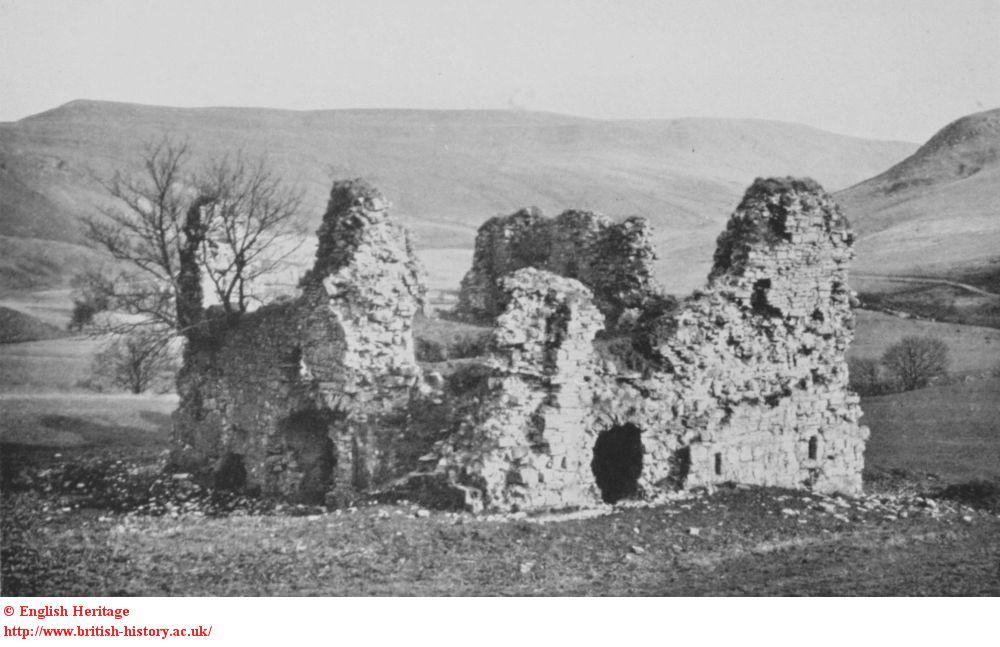

Lammerside Castle, Wharton (1)


Definition of Copyright

Where better to start than with a definition of what copyright actually is:

the exclusive and assignable legal right, given to the originator for a fixed number of years, to print, publish, perform, film, or record literary, artistic, or musical material (2)

A key feature of copyright is that it arises in a work the moment it is created by the originator. It does not have to be registered in the way that a patent might be for a process or a product. It is also important to note that ideas are not subject to copyright - it is the expression of ideas that is subject to copyright. This expression might be a photograph, a piece of text, a musical score or a painting. Copyright may be assigned by the originator to another party or waived by the copyright holder in certain circumstances.

Wherever an originator chooses to display or publish their work the copyright of the work remains with them unless they explicitly assign it to another party or until a fixed number of years have passed after their death. Copyright law varies country by country but in the UK a work remains in copyright until 70 years after the death of the creator at which point it passes into the public domain.

Misconceptions about the right to use images, especially those appearing online, abound.  One of the most common is that if an image does not appear with the copyright symbol and a named copyright holder it is not protected by copyright law. Although such copyright notices can help identify a copyright holder, images without this symbol are still protected by copyright law.  An image that is publicly accessible is still protected by copyright and an image being publicly accessible does not mean it is in the public domain. Copyright protects a work from any unauthorised use. Even if the reproduction of an image is not commercial, for example if it appears in a blog post, it is not legal without the permission of the originator.


Reproducing art and photographs

Cases involving paintings and drawings which are owned by museums can be complex. For example, should you wish to reproduce a photo of a painting by a living artist, you will have to gain permission from the artist, in addition to the permission of the organisation who owns the photo. It is frequently the case that photography is not permitted in museums and galleries, but if you have taken the photo yourself, and the composition is artistic and takes in more than just the painting itself, it may not be necessary to obtain permission. If an artist is deceased you may have to approach their estate for permission to reproduce an image if they have died within the last 70 years.

There are some organisations which specialise in sourcing paintings and drawings and for a fee will make available a high resolution scan of the work as well as arranging permission for an image to be used. Some UK based examples include the Mary Evans Picture Library specialising in historical images, and the Bridgeman Art Library.(3) Many national and university libraries also have extensive image collections which they are making available to students, researchers and commercial parties (although there are often charges for the service).

A great source of historical images with no known copyright restrictions can be found on the Flickr website: http://www.flickr.com/commons/ Their Creative Commons area is a project making freely available content from museums and galleries across the world. They also encourage tagging of the 
images to increase information available about the content.
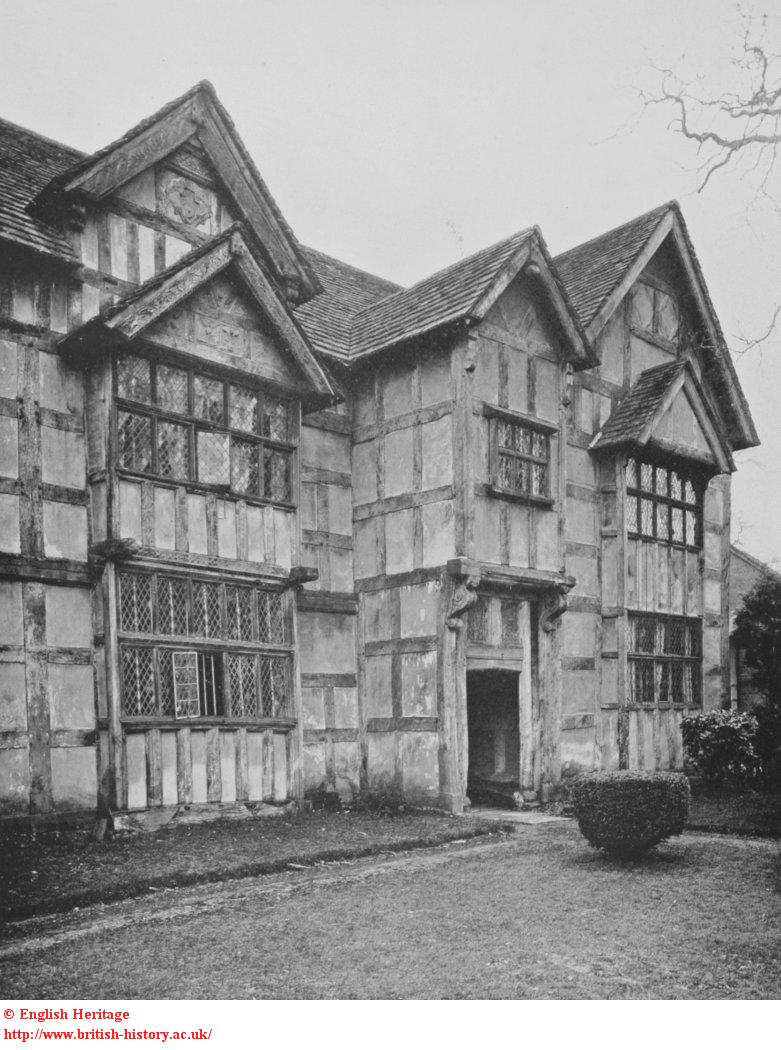

The Ley, Woebley (4)

Licences
For images which have previously appeared in print or online, it is usually the publisher who can advise on who the copyright holder is, and how permission to reproduce an image can be obtained. The originator of an image might have transferred copyright to a publisher permanently, usually termed ‘assigning copyright’, or they might have granted permission for it to be used only in a specific publication in which case it is referred to as granting a licence.

Licences to use images in publications including online projects will state where and how images can be used. So for example to illustrate this article I can use an image which is now owned by English Heritage, as they have given us permission to use images to promote the digitisation of the RCHME volumes. I could also use any images which are now out of copyright. I cannot use images in this post which have been cleared for use in the volumes by outside parties as permission does not extend to any other use of the image.
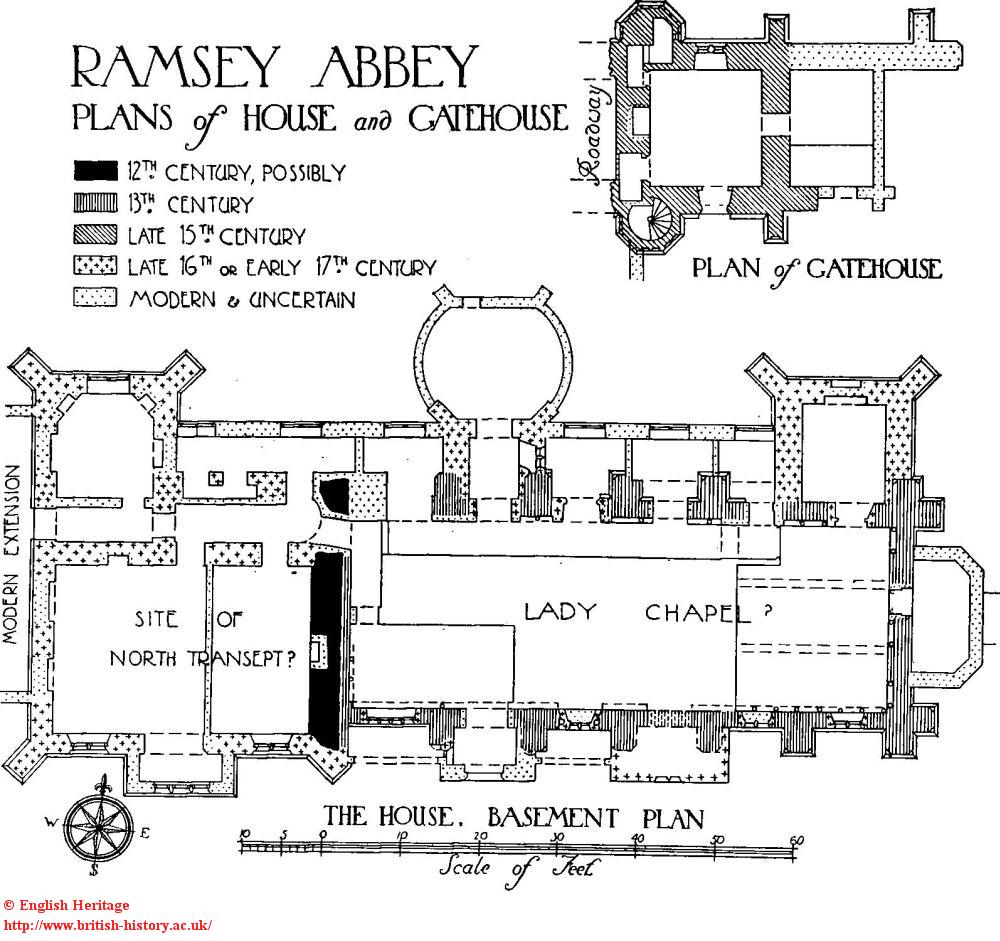

(5)


1. Lammerside Castle, Wharton. Royal Commission on Historic Monuments of England, Westmorland (1936) plate 80 http://www.british-history.ac.uk/report.aspx?compid=120920 retrieved 23/2/2013
2. http://oxforddictionaries.com/definition/english/copyright retrieved 7/12/12
3. http://www.bridgemanart.com/  http://www.maryevans.com/
4. The Ley, Woebley. Royal Commissions on the Historical Monuments of England, Herefordshire: Volume 3 North West (1934) plate 176 http://www.british-history.ac.uk/report.aspx?compid=124854 retrieved 23/2/2013
5. Plan of Ramsey Abbey. Royal Commissions on the Historical Monuments of England, Huntingdonshire (1926) p. 208 http://www.british-history.ac.uk/report.aspx?compid=123804 retrieved 23/2/2013

Wednesday, 20 February 2013

James Bettley on RCHME Essex

Following the publication of the RCHME, Essex volumes on British History Online, the architectural historian James Bettley has kindly written a guest post about the value, and limitations, of these volumes. Dr Bettley's revision of the Pevsner Architectural Guide to Essex was published by Yale University Press in 2007; he was also one of the contributors to the Victoria County History of Essex, Volume 11, published in 2012.

The Inventory of Historical Monuments in Essex


The Royal Commission on Historical Monuments (England) covered Essex in four generous volumes, published between 1916 and 1923. Essex was larger then than it is now – the south-west corner was cut off in 1965, to become the London boroughs of Barking, Newham, Havering, Redbridge, and Waltham Forest – but nonetheless the number of pages devoted to the county is a fair indication of the quantity of interesting buildings still to be found within its borders.

The fieldwork was carried out before the outbreak of the First World War, so it would not be unreasonable to question the value of an inventory that is now nearly a century old. But for those of us who work daily with historic buildings – and for those who only very occasionally wish to find out about an individual building – the Essex volumes remain an invaluable source of information. The descriptions of the major buildings, especially churches, are more detailed than Pevsner’s could be, and because they are written in fluent English, with a minimum of specialist terminology, and follow a standard format, they are easier to follow than the often impenetrable descriptions of the later statutory lists. Nearly all the parish churches, and selected secular buildings, are accompanied by a plan that shows the different phases of building, and there are numerous photographs taken in what was arguably the heyday of architectural photography. The maps are still often the best way of locating an individual building. And for those who wish to know more, the investigators’ original notes, often with additional plans and photographs, can be consulted at the National Monuments Record in Swindon.

Of course, the volumes have what seem to us now to be shortcomings. The brief was to cover buildings ‘from the earliest times to the year 1700’, extended in 1913 to 1714; any building (or any alteration to an older building) after that date was usually just described as ‘modern’. Moreover, works of this kind are only as good as the current state of knowledge, and timber-framed houses (especially plentiful in Essex) were assumed to be 17th, or sometimes late 16th, century, unless otherwise stated; most are now known to be considerably earlier. But that does not detract from the overall value of the descriptions.

The volumes have also become monuments in themselves. They record buildings that no longer exist, such as Little Horkesley Church

Little Horkesley, the Parish Church of St. Peter & St. Paul

destroyed by a stray bomb in 1940; or the interior of Castle Hedingham, before it was ravaged by fire in 1918. Many of Essex’s country houses are of later date than 1714, but Albyns, Belhus, Hallingbury Place, Marks Hall, Shortgrove and Weald Hall


all now demolished, are described and illustrated as they were at their period of greatest extent.

The circumstances surrounding the compiling of the volumes are also of historic interest, as Rachael Lazenby’s post mentions. But there was another aspect to the work that was not covered in the surprisingly interesting Report that was printed at the beginning of the first Essex volume. In the Report one of the investigators, Captain R. E. M. Wheeler, is congratulated on his commission in the Royal Field Artillery. Wheeler was to become better known as the archaeologist Sir Mortimer Wheeler, and in his biography Still Digging (1955) he gives an account of his first day’s probationary work in Essex with the senior investigator, J. Murray Kendall, in 1913. They met (with their bicycles) at Liverpool Street Station and began with what Kendall called ‘a Little Reinforcement’ – a ‘double whisky in new milk’. This was followed with similar reinforcement upon arrival at Dunmow, before starting work at Stebbing, where Wheeler’s realisation that he knew nothing about the items he was being asked to describe was consoled by a third reinforcement at the White Hart. What with that, and the outbreak of war the following year, it seems miraculous that the volumes ever appeared at all.

James Bettley

Tuesday, 12 February 2013

Richard Wade on Herefordshire

Recently we published Volume One, Volume Two and Volume Three of RCHME, Herefordshire. Richard Wade, Archivist of the Herefordshire Archive Service, has kindly written this guest post for us, explaining the significance of these volumes:


The Inventory of Historical Monuments in Herefordshire

In 1908, The Royal Commission on Historical Monuments for England were appointed to undertake a massive project to survey all the pre-1714 buildings, monuments and architectural features surviving in England at the time. The survey is of immense value as it recorded buildings that existed prior to the destruction inflicted by the Second World War and subsequent reconstruction and development. They cover many diverse items including buildings from manor houses to churches, castles and city cottages and include features such as fireplaces, bells, chests, ceiling decorations, doors and porches and effigies. The work of the surveyors was compiled into published volumes. There are three volumes for Herefordshire, which were first published in 1931: volume one covers the South West of the County, volume two covers the North West of the county and volume three covers the east of the county.


Unlike some counties, many of the buildings and features described still survive in Herefordshire. Hereford itself has the 17th Century Old House and the 15th Century Booth Hall and there is a Black and White trail around the north of the county where several of the villages, such as Dilwyn, are still predominantly still made up of Black and White Timbered Houses. There also several Iron Age Hill Forts around the county, such as those at Dinedor and Credenhill, which are described in detail in the volumes with diagrams. As many of the features have survived, the volumes form less of a record of what has been lost as in other counties. The inventories do however; still draw peoples’ attention to items that they perhaps know very well and maybe even walk past everyday without stopping to think about their history or significance. The inventories give detailed accounts of each parish with the monuments in it, highlighting those items of particular interest. They provide much background information to anybody wishing to visit these monuments, and in the case of churches for example, show plans of the churches and which parts of the churches date from which periods. The volumes also highlight features you may not otherwise necessarily see, such as capitals in the chancel arches in Garway and Rowlestone Churches. It is important that these features are described and people can appreciate them, when at the present time several churches and chapels have been made redundant and are difficult to access and others such as All Saints in Hereford now have Cafes in, which have dramatically changed their appearance inside. I am sure many developments have also taken place in some of the private homes that are described.

The area which has probably changed most is Hereford itself, and the volumes give information by street of all the pre-1714 buildings that existed at the time, many of which are no longer in existence and all of which there are brief histories given of.

Much attention is paid to the features of Hereford Cathedral, but there are also detailed notes on Dore Abbey and Croft Castle and the Feathers Hotel and Market Hall in Ledbury all feature.

As a result, the volumes are a valuable resource for anybody studying local or architectural history in the county and it is of great benefit to have them made available online.

Richard Wade
Archivist
Herefordshire Archive Service

Thursday, 7 February 2013

Thank You to Copyright Holders

BHO users may have noticed that we are gradually adding the inventory series of the Royal Commission on Historical Monuments of England. Since this is an architectural series there are, of course, many photographs and diagrams - totalling about 20,000 across the entire series. A large part of the work in digitising this series has been in determining who owns the copyright for each image and, where copyright needs to be cleared, contacting the relevant body or individual to ask their permission.

We have been very pleased that so many of the organisations we have contacted have willingly allowed us to use their copyrighted material. A few organisations did ask for a fee; when we explained that this we have no budget for paying for licences and that we are making the volumes free for all to use, in a continuation of the print project for which copyright was originally granted, a number then kindly waived fees for us. A few organisations were not able to waive fees and this means that where their images would have been displayed there will be a placeholder referring users to the printed volume.

We would like to thank all those organisations who have generously allowed us to use their images. Their public-spiritedness has meant that this rich resource of text and images will be available to anyone with an interest in English local history.

We are now in the process of trying to locate and contact individuals who may own copyright to certain images. We have published a list of them on this blog - if you know any of them please do contact us.

Finally we would like to give special thanks to Rachael Lazenby, who worked with us on the project as the Permissions Controller. Rachael worked through the 20,000 images with outstanding attention to detail and a rigorous methodology that made things very easy for the rest of the team. Because of the complexity of the process, Rachael has written a report laying out her approach to the project. This may well be useful to others, so we have placed Rachael's report on our institutional repository, from where anyone is welcome to download it.

Friday, 30 November 2012

Caroline Barron on RCHME

Professor Caroline Barron has kindly written a guest post for us about the importance of the London volumes of the Royal Commission series. Four of the five volumes are now freely available on British History Online and can be found here. The outstanding volume, on Roman London, will be published soon. Professor Barron writes:


The five London volumes of the Royal Commission on Historical Monuments, published between 1922 and 1930 are an invaluable resource for historians of London. The industrious and indefatigable compilers recorded and photographed all the surviving buildings erected before the beginning of the eighteenth century.

This was particularly important in the case of volume 4 which covered the wards of the City of London since this, the oldest part of London, had inevitably suffered the greatest assaults upon its built fabric: the dissolution of the monastic houses in the sixteenth century, the Great Fire of 1666 and the extensive ‘improvements’ in the Victorian period. Luckily for historians, the RCHM volumes were published before the final and greatest assault upon the City, the bombing of the Second World War.

Thus we have recorded the ground plans and details of the medieval fabric of destroyed churches such as Austin Friars (the Dutch Church) and the Grey Friars (Christ Church, Newgate Street). Many of the Company Halls were also destroyed in the Blitz, but in the numerous photographs in the RCHM volume which included their fireplaces, paintings and panelling, we have a priceless record of these lost treasures.

All those who study the history of the London will need to have recourse to these volumes which preserve a unique record, in text, ground plans and photographs, of a City that is otherwise almost completely lost. What John Stow achieved in his Survey of London in 1598 was matched by the compilers of the RCHM London volumes five hundred years later. Both works are essential tools for understanding the built environment of the City of London.

Professor Caroline Barron

Wednesday, 24 October 2012

Appeal for Copyright Holders

British History Online is currently digitising the inventory volumes of the Royal Commission on the Historical Monuments of England. These volumes contain some images which appear to be copyright to individuals. We will make all reasonable efforts to contact individual copyright holders where we can find them, and to that end we are publishing a list below. The list covers all volumes published between 1910 and 1985.

If you are one of the copyright holders on our list, or if you believe that you are a copyright holder for one of the RCHME images, please use our Contact Us page, or write to us at: British History Online, Institute of Historical Research, Senate House, University of London, WC1E 7HU.

To see the RCHME published on British History Online so far, visit this page.

Individual copyright holders

Mr W. E. Martin
Messers Romaine Walker and Jenkins
Mr Herbert Skryme
Mr W. E. H. Clarke, architect to the Dean and Chapter of Hereford Cathedral
W. H. Bustin
Sir Dr Cyril Fox FSA
Mr G. H. Kitchin
Mr G. H. Jack FSA
Mr T. H. Whittaker
Mr Alfred Watkins
Mr Edward Frankland
Mr E. W. Atwood
Sir T. G. Jackson (Wadham College)
Mr F. W. Troup
Mr R. Wynn Owen
Mr R. Fielding Dodd
Sir Charles Nicholson
Dr F. S. Eden
Sir Arthur W. Blomfeld
Mr F. C. E. Erwood
Mr Frank Green
H. Hodge
Dr William Martin
J. C. Melliss & Co.
Mrs E. Bambridge
R. Wailes
Mr F. R. Newens of Oxford
Dr Venn CMG, Queens' College, Cambridge
Mr Maurice Hill
Mr AHA Hogg
Miss Frances M. Forster
T. C. Lethbridge
Miss C. J. Fell
J. R. Boyden
Peter Ferrey
W. A. Miles
I. M. Blake
T. P. Harlow
W. Calcott Stokes
A. Moray Williams
C. E. Bean FSA
H. J. R. Bankes
S. A. Hamilton Fletcher
Lt-Colonel H. E. Scott of Encombe
C. F. Steil
Mrs C. M. Aitken
K. C. C. Selby
R. H, C, Atkinson
C. D. Drew
T. V. Holmes
N. H. Field
G. W. G. Allen
V. P. M. Oliver
G. R. Crickmay
Mrs H. E. O'Neil
Captain H. S. Gracie
Mr W. A. Baker
Major W. G. Allen
Dr Graham Webster
Mr P. J. Fowley
Mrs M. U. Jones
G. Till, Stamford
J. D. Dolby, Stamford
Mrs M E Cox
W. Fowler
R. H. Hayes
R. W. A. Dallas
J. P. Pritchard
G. B. Mason
Miss C. I. Fell

Additionally, the following people may have copyright in derived images and we would very much like to hear from them if they do assert copyright:

L.P. Wenham
S.N. Miller
G. Willmot
P. Corder
C. Roach Smith

Monday, 8 October 2012

Survey of London: Clerkenwell

This is a guest post from Mark Aston of the Islington Local History Centre, to mark the publication on British History Online of two volumes of the Survey of London covering Clerkenwell.


In 2008, staff at Islington Local History based at Finsbury Library, in the heart of Clerkenwell,  were delighted when the publication of the Survey of London (SOL) two volume-set (Vols. 46 & 47) (covering Clerkenwell) afforded a near-definitive source of reference detailing the history and development of this former inner London parish, now part of the London Borough of Islington. While it was known that this new addition to the well-respected SOL series was being researched, it was still a ‘red-letter day’ when staff first thumbed through the volumes’ 800 or so pages and studied with pleasure the accompanying images.

Not since the publication of William J. Pinks’s The history of Clerkenwell (1865) has such a comprehensive study of one of the oldest inhabited areas of London been undertaken and made widely available. Many books, pamphlets and manuscripts have been produced since Pinks’ history first appeared on Victorian bookseller’s shelves, but none such as the Survey has covered in great detail the places, events and people that have all contributed to make Clerkenwell what is has become today, an enduring and ever-evolving part of the capital.

For over four years now the printed copies of the two-volume set has been a veritable corner stone of information for Clerkenwell at the Centre. Not a day has gone by when staff or enquirers have not reached out to the Survey to begin researching, for example, a local building to discover its origins or to simply better understand the location in which a family historian’s ancestors once lived, worked or played; Clerkenwell was also once a playground for London’s elite and not so well-heeled with its spas, pleasure grounds and theatres – all covered in the Survey! Planners, architects, conservationists, local history societies and resident associations, genealogists, students and the wider public have all found the volumes’ pages the first place to begin when commencing their studies on an aspect of Clerkenwell’s past.

It therefore goes without saying that when staff and I first heard the news from English Heritage’s (and contributor to the Survey) Colin Thom that the volumes were to be made available on British History Online (BHO), including accompanying colour images and architectural drawings, it was extremely welcome. BHO is one of a number of online resources consistently used and recommended by Islington Local History Centre and, without sounding sycophantic, staff really appreciate the wide range of other publications available on the site as well.

While the Centre welcomes approximately 5000 visitors each year through its doors, a large number contact staff for information through our e-mail and online services. To now have the Clerkenwell Survey of London volumes available for consultation on the site is a great bonus. The Centre receives daily e-mails from researchers across the globe but especially those from English speaking countries: Australia, Canada, New Zealand and the United States. Many of course are family historians, with ancestors once born and/or resident in Clerkenwell.  As much as staff would like to undertake in-depth research on behalf of these long distance enquirers, it’s unfortunately not practical to do so given the volume of queries and limited staff resources. However, a simple link to BHO will now doubtless help satisfy many questions about the area. In addition, linking to the site will introduce researchers to nationwide reference sources, not just covering Clerkenwell and its environs.

The printed volumes will, of course, remain mainstays of our secondary source collection but the online versions offer even more scope for the researcher. Benefits include keyword searches, hyperlink references within the online text, capability to enlarge (and save) images and the inevitable, but essential, copy and paste facility. While the printed copy has an excellent index, it is naturally limited and an online keyword search highlights results within the text, allowing for quicker access. I especially find the hyperlinked references an excellent feature and a great time saver; the volumes’ extensive references are another very useful attribute, while also providing a superb bibliography for the location. And, the ease at which text can be copied and used, for example, when answering a remote enquiry or when using text in a report, is a great asset - full citation always given of course! The availability of accurate and reliable information found online in publications such as the Survey of London series will, in time, and hopefully, replace the need for researchers heading in the first instant to well-known online encyclopaedias for historical information. While these provide easy and quick gratification, we know that  content can’t always be relied upon and, therefore, should be validated from sources recognised as being reliable by professional academics and researchers, such as those found on BHO.

Finally, I’d like to highlight a couple of entries in the Survey which I think blog readers may like to peruse to learn a little more about the ancient parish of Clerkenwell. At the heart of the area lies Clerkenwell Green; I don’t think that the location has witnessed grass, or any greenery for that matter, in many centuries but the entry’s fascinating account of its history and development almost deserves a separate volume. In its time the Green has played host to, amongst others: a medieval nunnery, a holy well, a lost river, the Peasants’ Revolt, a magistrates’ court, Oliver Twist, radical political meetings, the world’s first public underground railway, Lenin, the Marx memorial Library and some great pubs too! Take a look also at Sadler’s Wells and the origins of this world famous dance theatre – a true survivor in every sense, with its entry providing a thorough description of the various buildings and uses of the location since the late-17th century.

It just leaves me to thank Jonathan Blaney for inviting me to write a few words in salute to the online publication of The Survey of London Volumes 46 and 47: Clerkenwell, and how useful a resource BHO is to those working in and using local history centres, archives, museums and research establishments across the country and beyond.